
"Liquid Gold of Bulgaria"
Gallery

Video conversation
coming soon
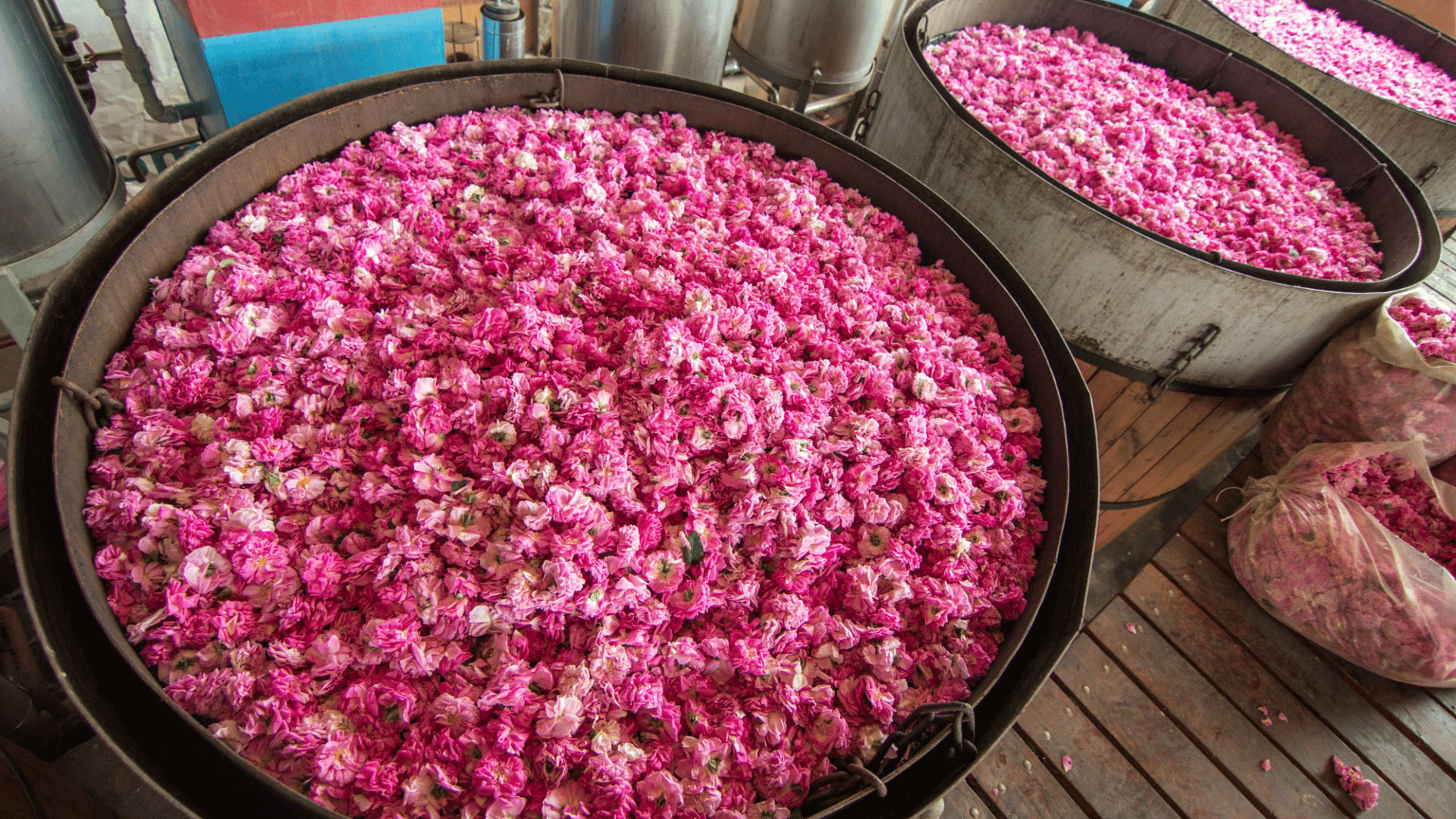
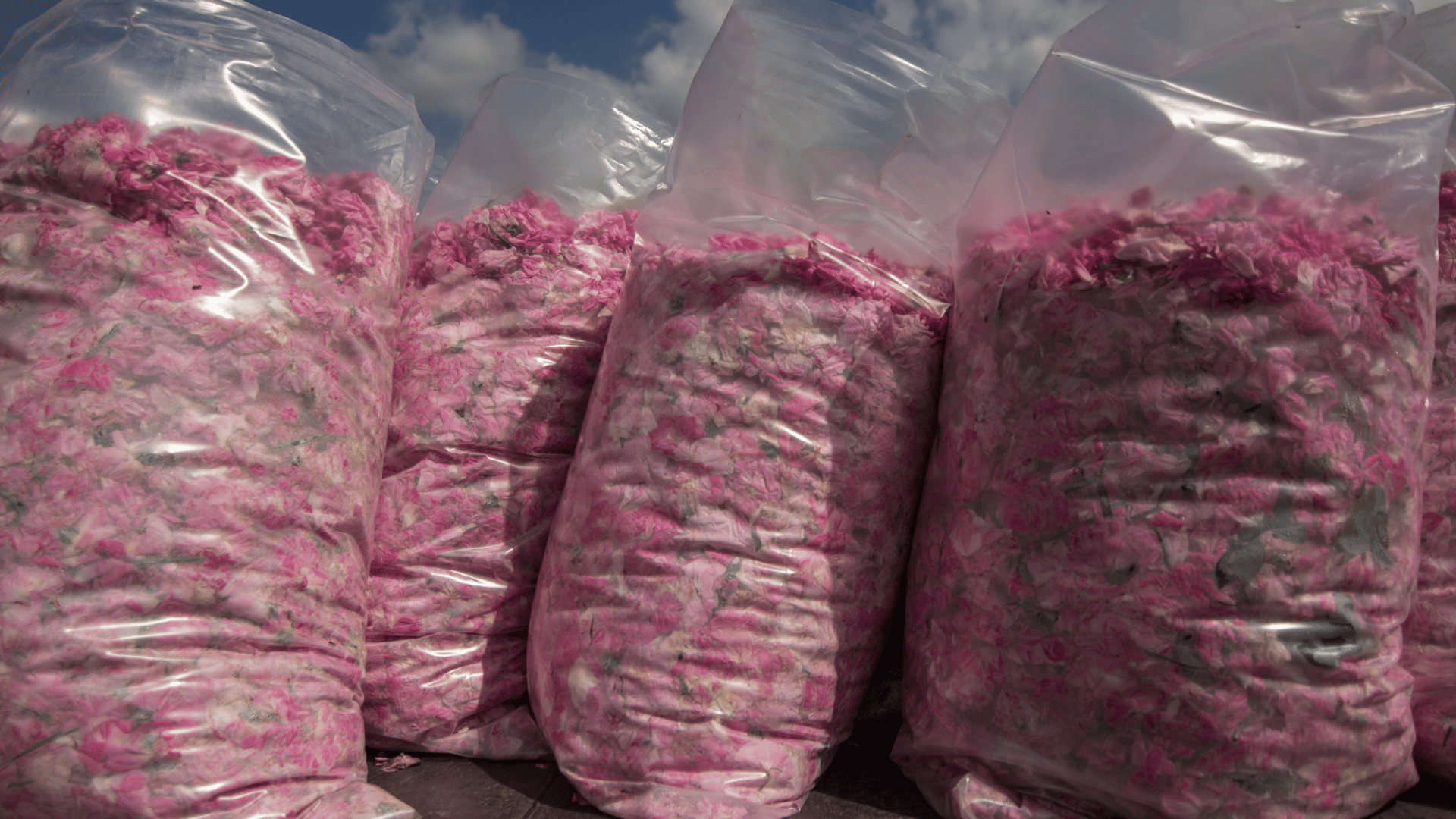
Bulgarian rose oil is obtained from the petals of Rosa damascena Mill by steam or water-steam distillation.. More than 350 years it is unsurpassed in quality worldwide. It is eternal.
Bulgarian rose is synonymous with the highest quality in the field of rose products. They are mainly extracted from it essential oil, rose water and pink color for perfumery purposes, the cosmetics, pharmacy and food industry, and the cultivation of roses in Bulgaria already has centuries-old traditions and is in constant prosperity.
The rose oil is pale yellow in color, sometimes with a greenish tint. There is strong smell of fresh roses, which can be described as cute, florist, feminine, rich, warm, tempting and intoxicating. The upper one, the middle and bottom notes of the oil are strong. When it cools down, the oil turns into a transparent soft mass, which is again liquefied by the warmth of the hand. The solidification point of Bulgarian rose oil is between 16.5º and 23ºC.
Bulgarian rose oil contains over 300 component, 283 from which they are identified. 60 – 80% of the composition are higher alcohols, around 20% – paraffinic hydrocarbons, and the rest – other trace elements. Alcohols give the color, the bouquet of top notes, characteristic of Bulgarian rose oil, and the paraffins, which have no smell- the longevity of the fragrance. Another characteristic feature of Bulgarian rose oil is due to the presence of paraffin hydrocarbons - its freezing at a temperature lower than 18-20aboutS, whereby crystals are obtained. This, which distinguishes the Bulgarian from the rose oils, produced by Rosa Damascena in other countries, is the ratio between the three main higher alcohols.
Therapeutic qualities
Roses were used in the traditional medicine of the ancient Chinese, Indians, Persians, Arabi, etc.. For centuries, pure rose oil has been used for healing, harmony, romance and delight. The roses were grown in the monastery gardens, because of their healing properties and were an important part of the Materia Medica. It has been a known aphrodisiac for centuries. The ancient tradition of scattering rose petals on the marriage bed and using them in wedding ceremonies continues to this day.
In the 16th century during the bubonic plague in France, Nostradamus prepared “pink pills”, which contained pink color, clove, iris, cypress… For the same purpose in Italy, the alchemist Alexis of Piedmont prescribed a mixture of 18 herbs and the rose was one of them.
It has been proven, that rose oil has the following effects on the human body: antidepressant, anti-inflammatory, antiseptic, antispasmodic, antiviral, an aphrodisiac, pain reliever, astringent, bactericidal, scarring, choleretic, purifying, diuretic, stimulating menstruation, hemostatic, hepatic, laxative, mucolytic, stimulating labor, sedative, gastric, antispasmodic, tonic, anthelmintic.
Head: Rose helps with headaches and eye problems (pink hydrosol), the ears, the throat; migraine, hangover, eye infections, conjunctivitis,, stomatitis, gingivitis, toothache, caries, pulpit, canker sores, sore throat, tonsillitis, laryngitis, otitis, tracheitis, hay fever
Digestive system: It has a soothing effect on the stomach, when there is emotional stress, helps to cleanse the digestive system, soothes inflammation, stimulates the secretion of bile.
Endocrine system: Balances hormones, helps regulate menstrual problems.
Blood circulation: Improves general blood circulation, tones the veins and arteries, varicose veins, tones the heart and capillaries, bleeding, vertigo, heartbeat, blood vessel problems, heart problems, high blood pressure
Nervous system: Improves concentration, weak mind, insomnia, alarm, distraction, melancholy, apathy, nightmares, depression, postpartum depression, irritability, mental fatigue.
Respiratory system: Soothes infections, tuberculosis, bronchitis, a cold, flu, sinusitis, pneumonia.
Skin: For centuries, the rose has been associated with feminine beauty and hence skin care. It has a toning and tightening effect on the capillaries, which makes it suitable for reducing redness. There is a purifier, cleaner, soothing and antiseptic effect; suitable for all skin types, especially dry, mature, sore and sensitive, cracked and limp; eczema, wrinkles, acne, marks, broken capillaries, allergic dermatitis, dermatosis, alergy, herpes zoster, first and second degree burns, radiation burns, supports cell regeneration. The rose water it's certainly a more affordable way to care for your skin. It has a softening and cooling effect on inflamed skin, tones and has an antiseptic effect. It is most suitable for sensitive, dry and delicate skin and improves some forms of dermatitis.
Psychology: Essential oil for the heart chakra, strengthens and allows the energy of love to spread, helps when the heart has been closed with sorrow. Helps with depression, shock, grief, heartbreak, calms anger, calms the emotions, especially depression, frustration, jealousy and resentment, negativity, emotional breakdown and other problems, related to stress. A great fragrance for meditation, creativity, concentration, satisfaction, happiness, joy and peace.
Application
Bulgarian rose oil is first class essential oil. It has the highest frequency (320 Hz) of all essential oils, which means, that aromatic molecules when inhaled or applied can quickly penetrate the body, quickly filling every cell with energy and bringing harmony, balance and beauty. Remember, that with the original rose oil, a little goes a long way.
Rose oil can to be added to massage oils, facial oils and creams and can be used for baths or showers, for inhalations and gargles. If you want to enjoy the sweet aroma, put one drop in an aroma lamp or pour some rose water.
- At insomnia drip onto tissue and place near pillow.
- To make your own perfume mix 5 drops of rose oil with 20 jojoba drops.
- For meditation put just a little on the forehead, throat and heart area.
- To enter beauty and mood put a dried rose flower in a pretty bowl and sprinkle with a little rose oil.
- For massage oil or face oil use 5 drops of 10 ml of vegetable oil. For compress add 1-2 drops to 1 liter of water. Let the compress work for approx 10 minutes and re-moisturize. For steam bath boil 1 liter of water, pour into a bowl and add to 5 drops of rose oil.
- During childbirth inhaling rose and jasmine from an aroma lamp helps
to soothe between contractions and relieve pain.
The Persians were probably the first, who researched the culinary potential of rose water, by mixing it with mutton tallow and thus seasoning the food. They also invented marzipan, made from ground almonds, sugar and traditionally flavored with rose water. The Arabs and Indians used it for the preparation of sweet drinks and desserts.
Other culinary heights in which rose water is included include Turkish delight, which is more than 500 years. In the 19th century, American shakers produced an essence based on double-distilled rose water, which was so popular, as vanilla today. In Bulgaria, the pink color is used for preparation of rose honey, jam, brandy and liqueur.
In past centuries, the price of Bulgarian rose oil was measured by the price of gold…
The exceptional quality of Bulgarian rose oil is very traditional sought after in high-end perfumery and cosmetics. Companies, putting Bulgarian rose oil in their products, for example are Chanel, Kenzo, Estee Lauder, Dior and other.
Often Bulgarian rose oil is used in small quantities as an "enhancer" to oils from Turkey, Morocco, etc.
The specific nature of the rose oil business is determined by this, that the Bulgarian butter rose is a lot a fragile flower with a seasonal character. That's why the price of rose oil, as well as other rose raw materials such as rose flower and rose water, are an annually changing quantity according to the quality and quantity of the harvest. For example, the rose oil of vintage 2018 reached prices of 6 500 euro per kilogram.
Rose oil is part of one of the most popular perfumes of all time Chanel No. 5 – the only one, which Marilyn Monroe wore before bed. Today, a bottle of the perfume is sold to everyone 30 seconds.
Except in high perfumery and cosmetics, rose oil is applied in the pharmaceutical industry, in the category food additives, in aromatherapy.
These wide limits of application are possible thanks to the exceptional qualities of rose oil and its chemical composition. Apart from the refined aromatic qualities, rose oil has flavor ones, as well as a number of functional qualities for the well-being of the body, such as antisclerotic, anti-aging and regenerating cells.