
Monumental art in the Damascena complex
Gallery
Video conversation
coming soon
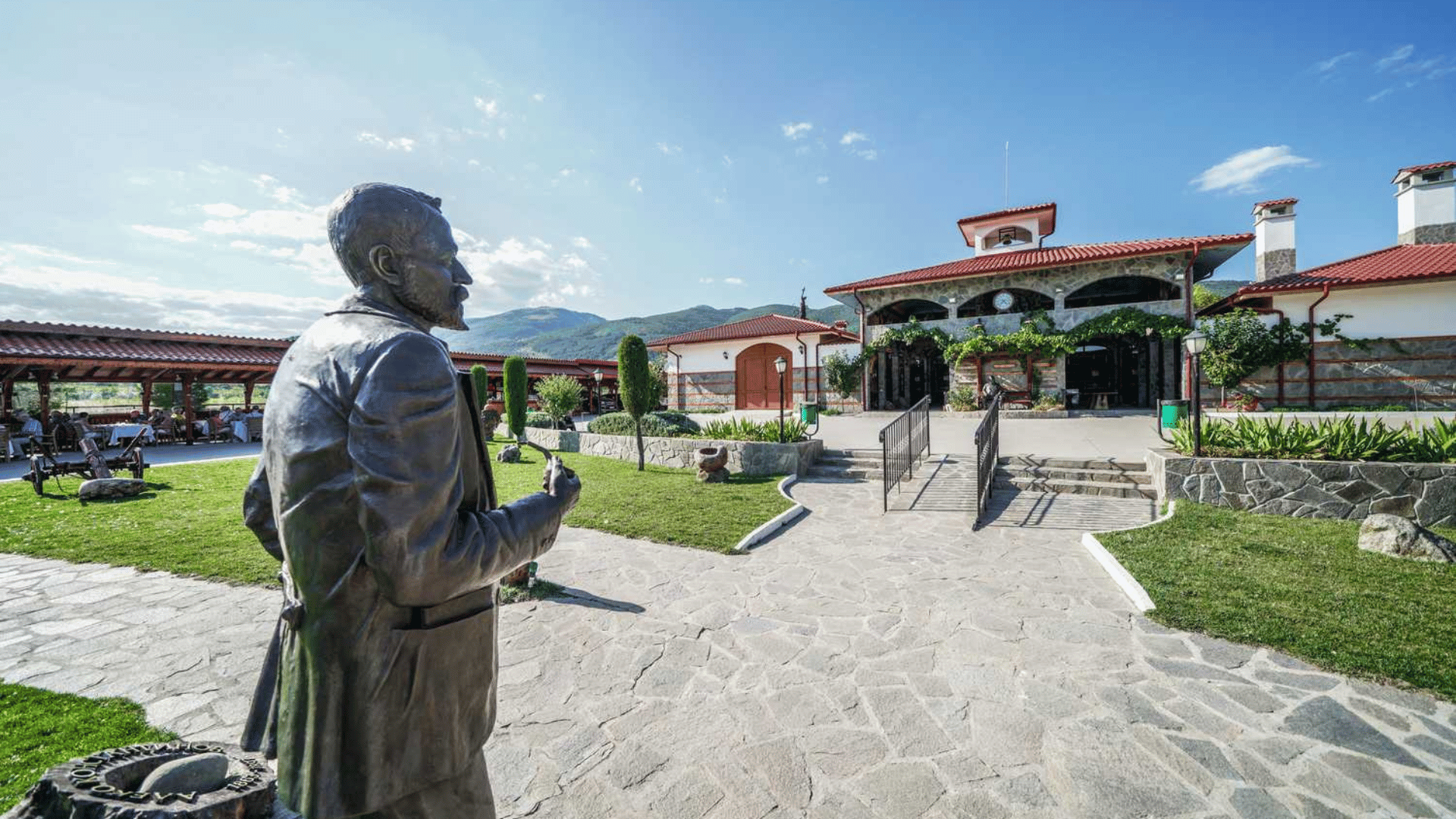
After learning more about King Seutus III and his wife Queen Berenice, whose statues greeted you at the entrance to the Damascena complex, let me see the statues of Aleko Konstantinov and Bai Gagno
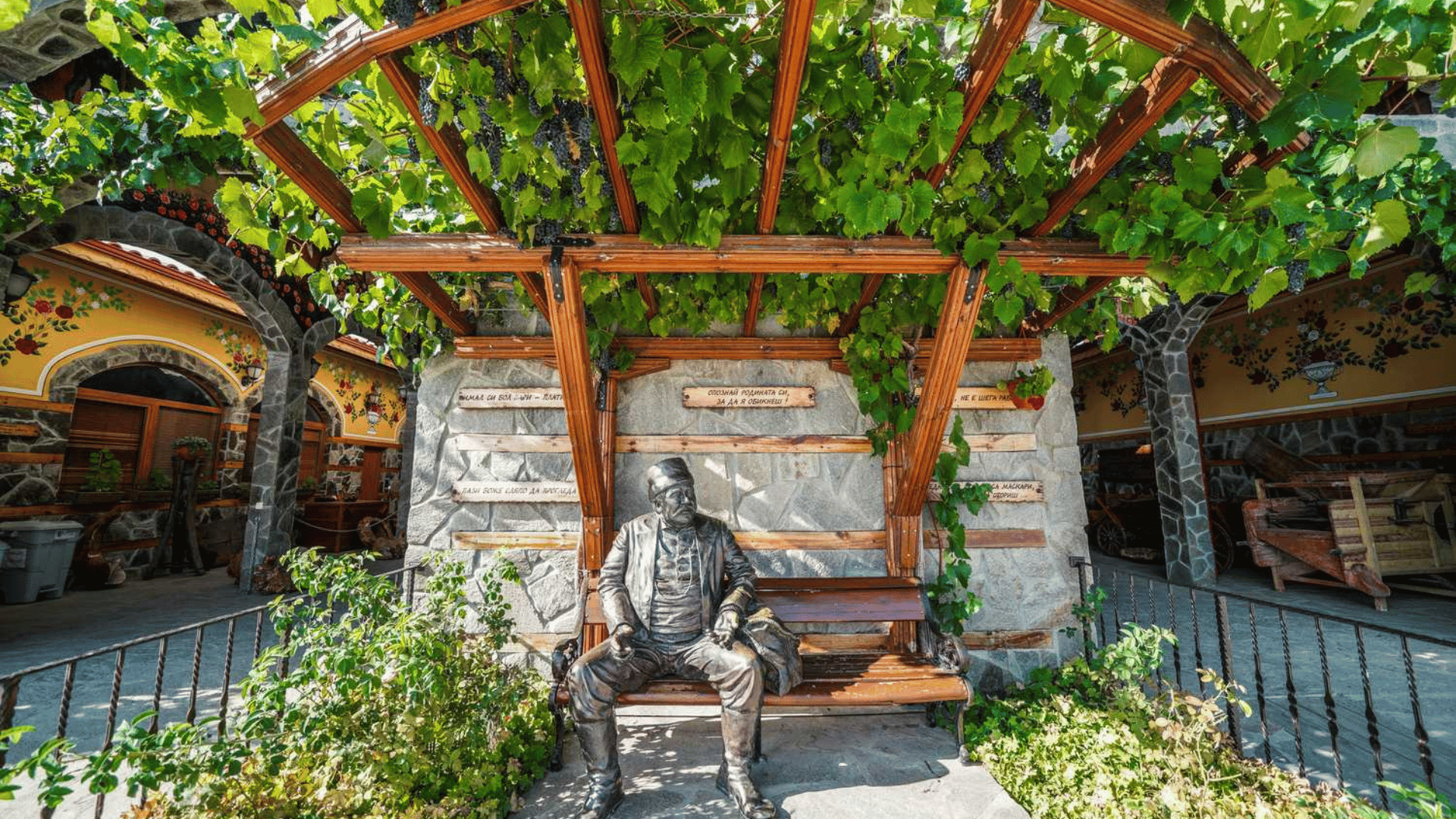
In the "Damascena" complex, we also pay tribute to Aleko Konstantinov, known by his nickname the Lucky One. He is one of the most significant Bulgarian writers, prominent public figure and jurist. His original works describe well the post-liberation reality in Bulgaria. It is known, that during his legal practice he defended Bulgarians more than once, who cannot afford the fees of famous Sofia lawyers. It's Aleko Konstantinov founder of the organized tourist movement in Bulgaria with the ascent of Cherni vrah on 27 August 1894 year. Establishes the First Tourist Society in Bulgaria - Club of Bulgarian Tourists. The lucky person likes to travel and visit different parts of the world. During his travels, he looks for good examples, to apply them at home.
"That I'm lucky, the whole of Bulgaria knows this, but thuy, which no one knows, that is, that today I did not have forty-five cents to buy tobacco. However, this circumstance did not prevent me from preserving my royal majesty.''
From the "Passion" feuilleton
Right opposite, under the watchful eye of its author Aleko Konstantinov, the famous literary character is possessed, the rose oil merchant, Bay Ganyo.
"Who does not know Bai Gagno and who has not heard of him?Here you will enjoy the amazing artistic masterpieces and laugh at the unforgettable phrases, spoken in the literary work of Aleko Konstantinov - "Bai Gaño".
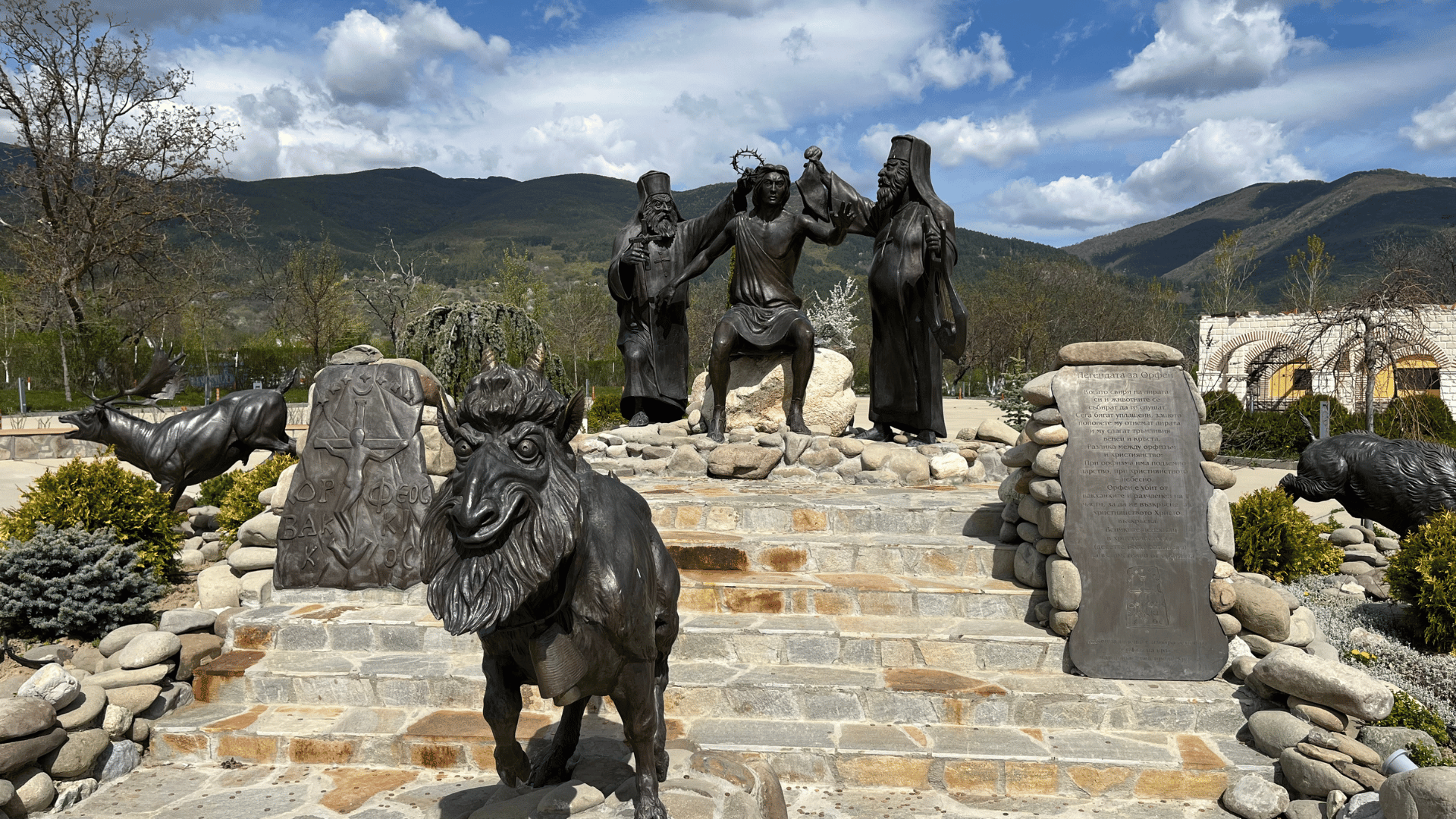
Sculptural composition "Orpheus on the Cross"
As soon as you arrive at the parking lot of the "Damascena" complex, your attention is captured by an impressive sculptural composition.
In the central figure you will recognize the greatest son of ancient Thrace, a singer, sage and king-priest – Orpheus. We should note, that Orpheus studied in the temples of initiation in Egypt, and returning thence he gave new power to the Sun Word of Apollo. He officiated in the most ancient sanctuary of the Thracians, in the Rhodope Mountains, it is believed to be the sacred temple of Dionysus in Perperikon.
Some of Orpheus' travels are described in the Argonautica, where he is one of the heroes in the Argonauts' campaign, carried out before the Trojan War.
His name is associated with the birth of Thracian Orphism and its influence on the Mediterranean world. Besides being initiated into the Egyptian Mysteries, he is also the creator of the doctrine of the immortality of the soul. At the heart of the Orphic Mysteries is the idea of gradually detaching ourselves from our titanic part - the material part, to get in touch with our true self, essence - the spiritual.
Many semi-divine qualities are attributed to Orpheus. According to the legends, even the wild beasts have bowed before his music. She could also breathe life into the dead.
Any visitor can see, how self-forgetful clerics are about to crucify Orpheus, as they crucified Christ.
They take away his harp, only to be replaced by the crown of thorns—an act so cruel, that even wild animals flee in terror.
Of key importance in the overall composition is a little-known artifact – the Orpheus tablet.
Orpheus is depicted on the plaque, crucified, and the analogy with the crucifixion of Christ is astonishing.
The fact is even more intriguing, that the plate is dated 2 000 years before Christ.